12/02/2025
Assistant Professor of Psychology, Dr. Megan Boyle, is passionate about proper pest management, particularly regarding mice. She has experienced firsthand the stress of mice infestations and the difficulty in resolving them. Mice are naturally attracted to spaces that are frequented by humans, and residents of Cortland County report mice in their homes at rates higher than the national average. Check out Dr. Boyle’s tips on how to safely and sustainably manage mice that make their way inside your home or apartment this winter.
Signs of mice in your home
- Droppings that look like black grains of rice
- Piles or nests of shredded paper, fabric, bird seed, or other soft materials in cupboards, corners, or behind or inside of appliances (e.g., washing machines)
- Scratching sounds in the walls
- Chew marks on food packaging, furniture, or walls
The best way to deal with mice in your apartment is to avoid getting them in the first place.
- Mice are attracted to properties with unsecured food and materials with which to build their nests. Secure outdoor trash, food, and food-related packaging (e.g., pizza boxes) inside of trashcans with lids. Secure food indoors in airtight containers. If you put out bird feeders, bring them in at night and sweep up excess seed every day. If you feed stray or feral cats, pick up the food after the cats have eaten.
- Mice can enter buildings through holes the size of a dime. Seal holes that are dime-sized or larger with wire mesh or hardware cloth. Mice can chew through other materials such as plastic or tape.
- Mice take refuge in bushes. Mice also climb trees and access entry points on roofs. Keep bushes and trees trimmed so that branches are at least 3 ft from the building (including the roof).
If you find signs of mice, here’s what you can do.
- Clean up and secure the property with the steps above. This will help to deter mice in the future.
- Use snap traps baited with peanut butter in places with signs of mice (e.g., where you found droppings or nests). Only use snap traps indoors and be sure to place them in locations that pets cannot access. Check the trap twice a day. Dispose of mice in plastic Ziplock bags and reset the trap until you no longer catch any mice.
Do not use these methods of managing mice.
- Poison does not kill mice fast enough to keep up with how quickly they reproduce. Poisoned mice can die in walls and around your home and be eaten by pets, thus poisoning them. Poisoned mice are also consumed by feral and stray cats, and other predators like owls and hawks. These animals become sick and often die.
- Glue traps do not immediately kill mice and result in them becoming stuck and slowly starving. They may chew off limbs to escape the glue, resulting in the spread of blood and other hazardous fluids throughout your home.
For more information on how to manage mice, visit Raptors are the Solution, a nonprofit in California that has advocated for effective, ethical, and humane, ways to control mice. It is possible to keep your homes and apartments free of mice, and in an environmentally responsible way, by using the resources above.
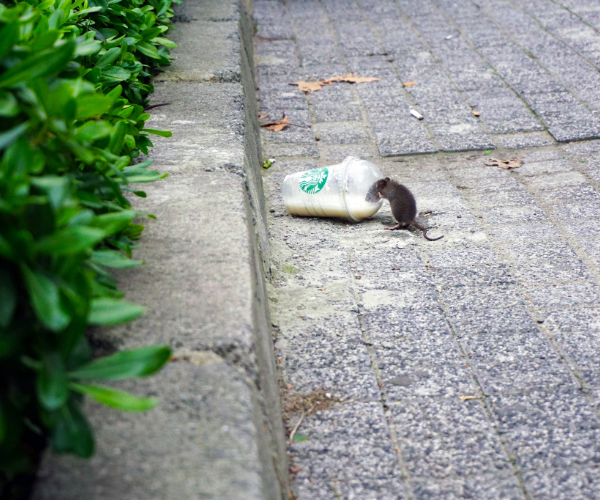
Photo by Mert Guller on Unsplash